
Meet Our Guardians
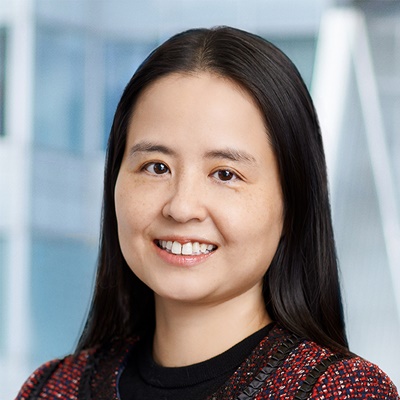
Janice Leung
Manager of Compliance
What do you do at the BCSC?
I spend a lot of time visiting registered investment firms like portfolio managers and investment fund managers to understand how their businesses operate and whether they’re following securities laws.
A big part of that work is checking how firms meet their obligations to clients. Are they really putting investors’ interests first? Are they collecting the right information about their clients’ financial situations, investment goals, and risk tolerance? Are these investment firms really helping investors to try to achieve their financial goals?
We look closely at things like client statements, too. Are they clear, complete, and useful so investors can actually understand what they own? We check whether firms are giving clients the information they’re required to receive, and whether their websites and marketing materials are accurate rather than exaggerated or misleading. We also make sure firms’ investment recommendations match the client’s actual needs and risk profile.
My job is not to ensure that firms make money. That’s not what a regulator does. My job is to make sure firms are complying with the rules, so investors are protected.
You’ve been at the BCSC for more than two decades. How has your work evolved?
I’m a Chartered Professional Accountant and also a Chartered Financial Analyst (CFA Charterholder). Before joining the BCSC, I spent six years in two “Big Four” auditing firms in Vancouver, and before that in Hong Kong auditing banks and investments funds.
I became a Certified Fraud Examiner about 15 years ago, around the time the Bernie Madoff scandal unfolded in the U.S. That was a big moment for the compliance world. It made a lot of us think: If fraud is happening, would I be able to recognize the signs? How do I strengthen that part of my professional toolkit? It pushed me to deepen my fraud knowledge so I can better protect investors.
The investment world itself has become much more complex. When I started, you didn’t need to know nearly as much about things like crypto assets or artificial intelligence. Now, you’re expected to know a little about everything.
Why does this work matter so much to you?
I truly believe the work I do protects the public. Coming from a minority background, I know how important it is in a diverse place like Vancouver for all communities to receive equal protection. People from every background deserve to have regulators making sure investment firms are operating properly. I take that responsibility seriously.
I’ve also done a lot of presentations to the public about investor protection in Cantonese and Mandarin, which was incredibly meaningful to me. Being able to help people in their own language felt important.
What has it been like being a woman in this industry?
There are relatively few CFAs in the world, and an even smaller percentage are women—somewhere around 20 to 30%. Being a woman and a CFA sends a message: Anyone can be part of this profession. And I’m proud to represent that.
There is still a perception that the finance world is very male‑dominated, for many reasons. Though, interestingly enough, women make up 56 per cent of the BCSC’s workforce and 60 per cent of our executive team.
Over my 20 years in this field, I’ve talked to countless clients, and I still see a persistent pattern: Many women are tentative about managing money. In a lot of couples, the husband handles the finances. We see heartbreaking situations where a husband passes away and the widow suddenly realizes she doesn’t know how her money is being managed. And then sadly, someone takes advantage of her trust. It also happens during divorces, when women discover their accounts were invested in ways they never agreed to. Sometimes they lose everything. In 2026, we shouldn’t still be seeing this.
That’s why our message to investors about taking control of their own finances is more important than ever. Everyone needs to become financially literate, and if they’re using an investment advisor, check up on them, and even ask them hard questions. It’s easier now than ever to do that, because there is a lot of reputable, reliable, easily accessible financial information out there, including some great resources on our investor education website, InvestRight.org.
What attracted you to this job and what keeps you here?
I get to see behind the scenes of how investment firms operate. I get to ask a lot of questions and interview many investment personnel such as Chief Investment Officers and traders, etc. Every firm is different, and that’s what keeps it fascinating. I hear about their investment philosophies, how they view the economy, and sometimes their ideas lead to really unexpected conversations. One firm might start by explaining why they invest heavily in grocery stores, and that might lead to a broader discussion about consumer behaviour. Another might be exploring a fund focused on water, which can lead to a whole conversation about global water demand. I don’t necessarily take everything they say at face value, but those conversations are often the most engaging part of my work.